



A global problem: Food waste leads to enormous losses
According to recent figures from the United Nations Food and Agricultural Organization (FAO), the global volume of food waste is estimated at 1.6 billion metric tonnes of “primary product equivalents.” The total food waste for the edible part of it is 1.3 billion tonnes. The resulting carbon footprint is estimated at 3.3 billion metric tonnes of greenhouse gases released into the atmosphere each year. Added to this is a water consumption of 250 km³ annually for the production of lost or wasted food.
Where exactly is food lost?
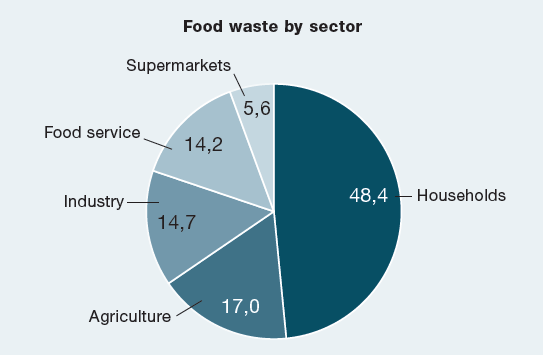
Although retailers and restaurants together account for a rather small percentage of food waste, about 20 percent, the problem has a significant economic impact on businesses. Direct financial losses for supermarkets and restaurants occur throughout the supply chain. For example,
there are costs for purchasing, storing and, in the case of restaurants, preparing and cooking the food. In both cases, disposal incurs additional costs. Unsold food in retail stores and the discarding of prepared but unmarketable food in
restaurants also represent a missed revenue opportunity that negatively impacts the profitability of an operation.
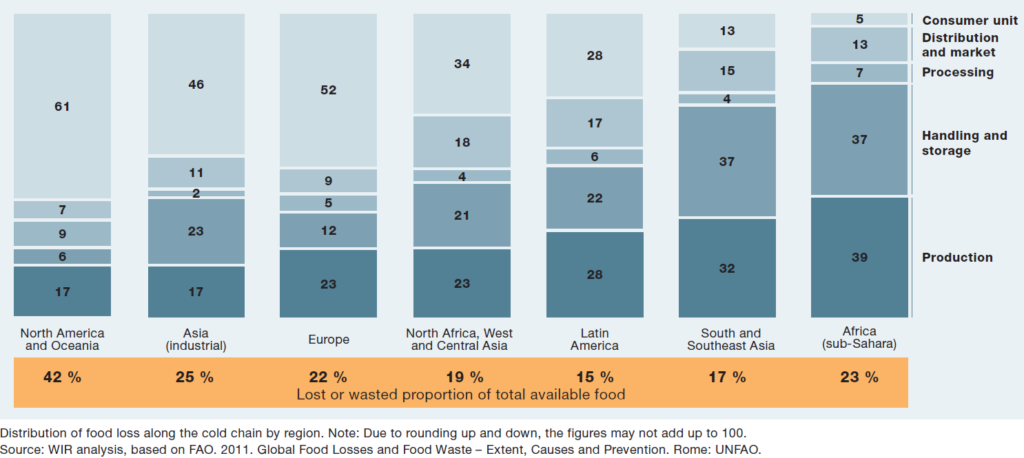
The below statistics show that in less developed regions, food waste tends to occur on the production side, while in more highly developed regions, a larger proportion of food is wasted by the consumer. The figures refer to kilocalories wasted in percent.
Causes of food waste in restaurants
Throughout the restaurant production chain, risks always arise with regard to food loss or waste. During food preparation, edible parts of food may be discarded as waste. This is often caused by inefficient working techniques or improper planning, which also affects the menu when some ingredients cannot be used in their entirety. Another issue is overproduction. Striving to stock enough food to meet demand may result in not all prepared food being sold or consumed. The excess food is then often thrown away. Leftover food on plates must also be disposed of, if only for food hygiene reasons. Portion sizes can play a role here.
To read further on this topic and get tips against food waste in restaurants visit the Testo website and download the Food Waste Whitepaper.




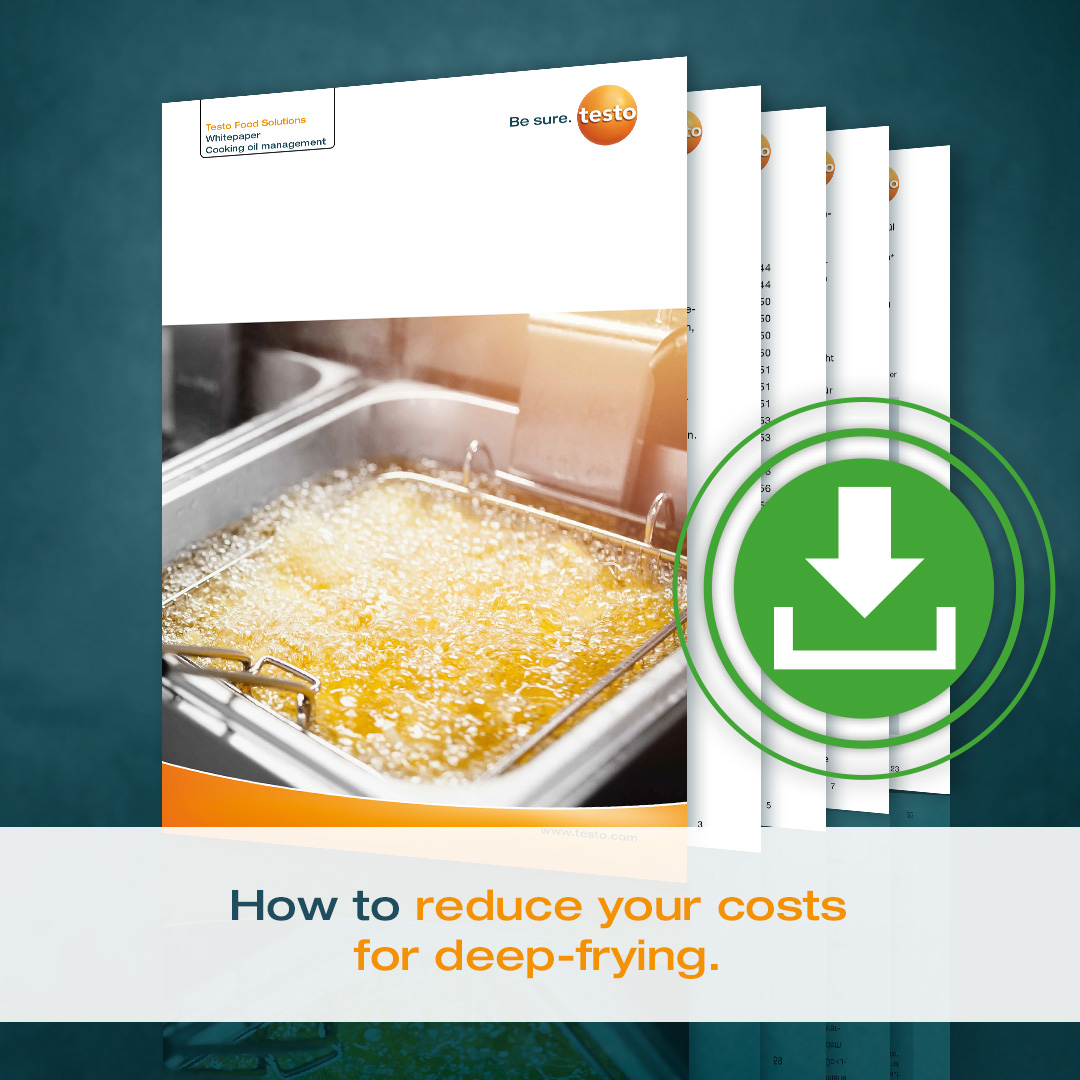 Reduce cooking oil costs while ensuring quality
 Expert knowledge on CO2 monitoring
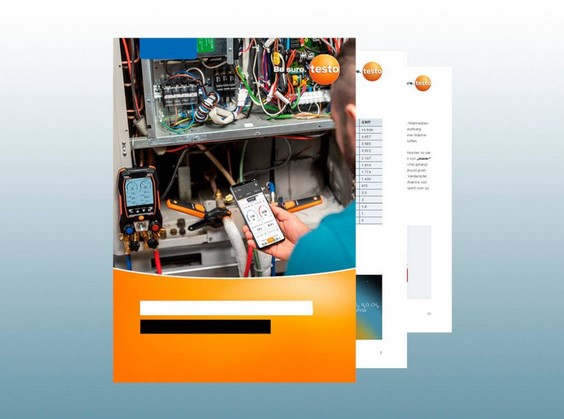 Refrigeration knowledge - in 3 modules


